
The Junior Gamekeeper course of the Vocational School ALSUD of Mértola has arranged, awarded in partnership with the Mértola Municipal Council, an Experimental Territory, where classes are now practical, introducing new management and training on the ground, with special regard to Habitat Management, thus implementing a Sustainable Wild Game and Resources Management together with a view to the future.
The Alsud Professional School, with its unique, in Portugal and Spain, Course of Game Management, is now in regular use, for experimental purposes, of the Grounds I, II and III of the “Forest Perimeter of Coutos de Mértola”, with an area of 304 hectares, in Mértola, and has installed the “Wildlife & Game Resources Management and Biodiversity Experimental Hub” (CEDGRCB).
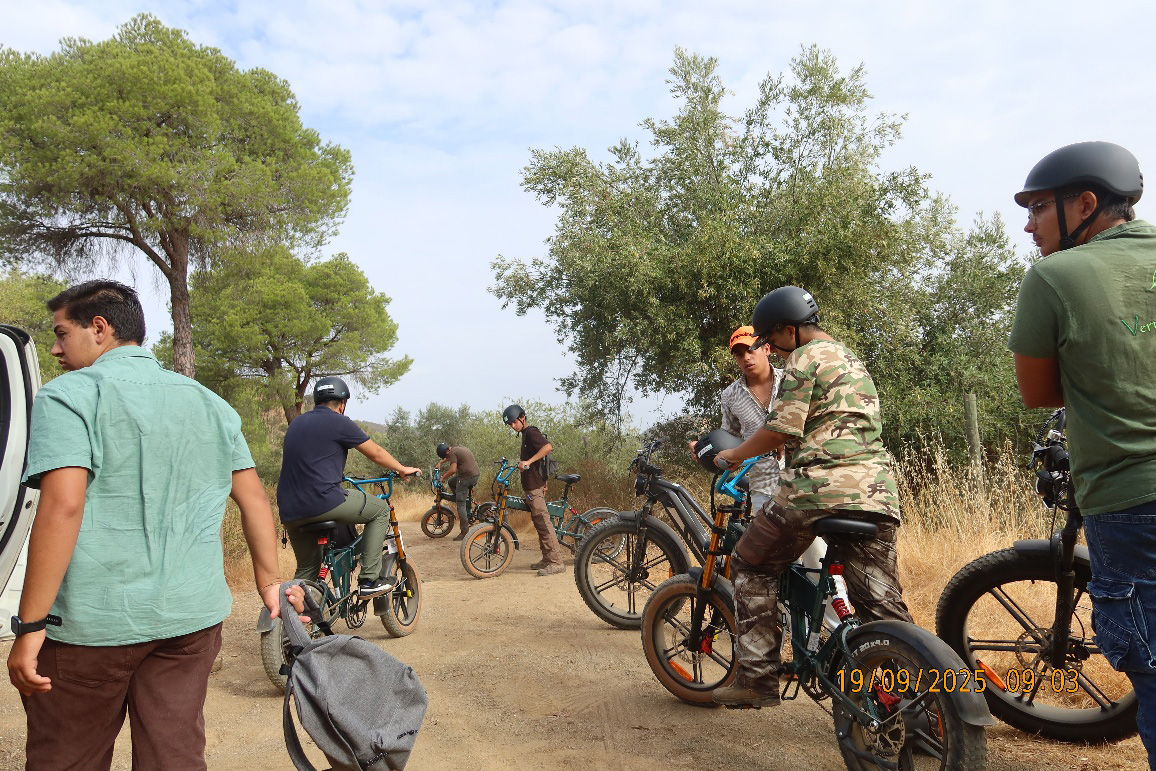
These estates are around Mértola, and students and trainers are going out daily to manage the territory, carrying out experiments, checking, cleaning and supplying routines, now on cargo electric bikes, and their management, surveillance and maintenance are now facilitated and assured in an ecological and silent way. In Alsud, Portugal, there exists the Alsud Professional Vocational School, contrived by the local Cooperative of Alsud, where various teaching skills are taught and developed for different generations and needs.
The school strives to provide vocational education and specialised technical training for young people and adults. The school is committed to the students’ developmental journey and to utilising the treasures/assets of the local region in Mértola, such as the Vila Museu, the National Hunting Capital, and headquarters of the Guadiana Valley Natural Park.
The use reached the following purposes
The experimentation and monitoring of the best Game and Resources Management Practices, restoring the short local population of red-legged partridges “Alectoris rufa” and wild rabbits “Oryctolagus cuniculus algirus”, as well as other wildlife occurring, is also used as an Experimental Forest and Farmland Demonstrative Ground, which is already shared with other institutions and also used for other experiences with innovative, sustainable, and compatible practices, such as the following:
Mértola municipality, the Biological Station, FENCAÇA, the Game School, Terra Sintrópica Association, ICNF, SEPNA (Wildlife & Game Authorities), CIBIO-InBIO (Oporto University), INIAV (Veterinary & Food Investigation), LPN (NGO), etc.
In addition to being used for experimentation and training of game management classes, this territory is already used as a representative and demonstrative ground of the best field practices—with systematic evaluation of the results—during the various training courses that take place within the scope of the Game School and also carries out awareness and demonstration activities, thus enriching the activities of the autumn Mértola Game Fair.
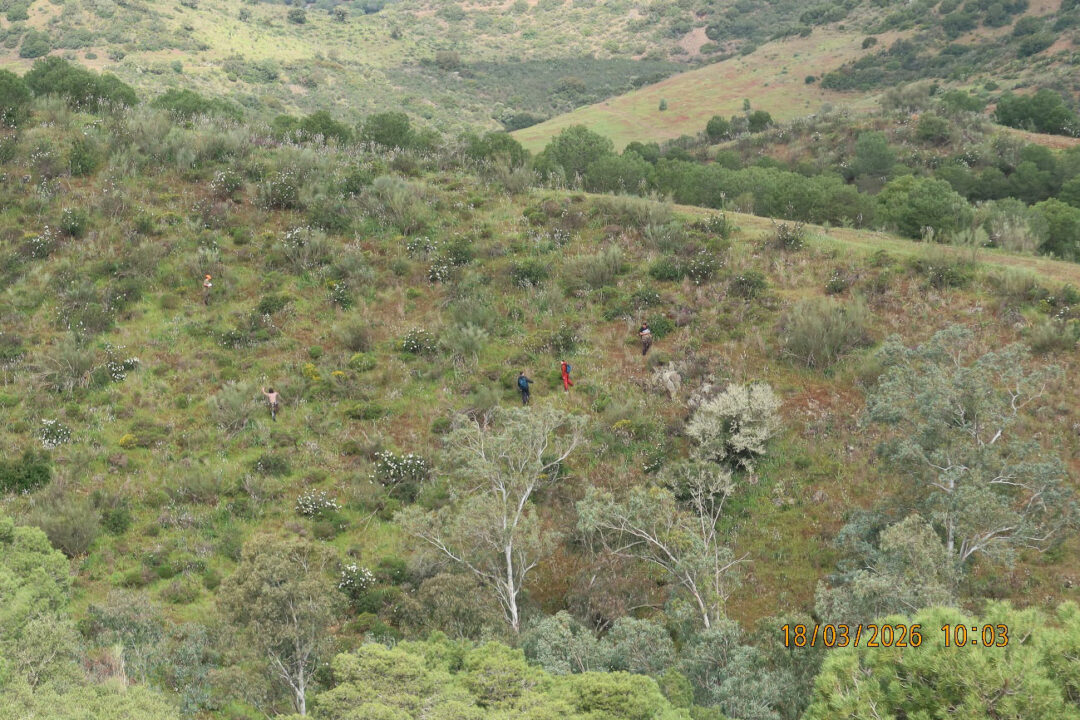
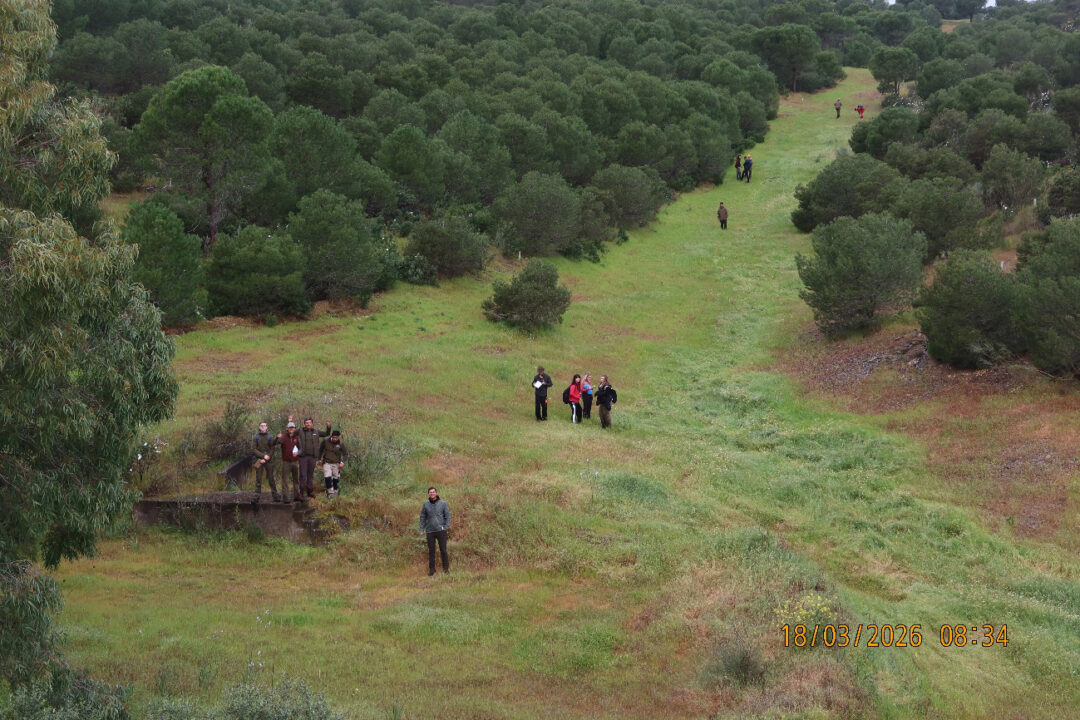
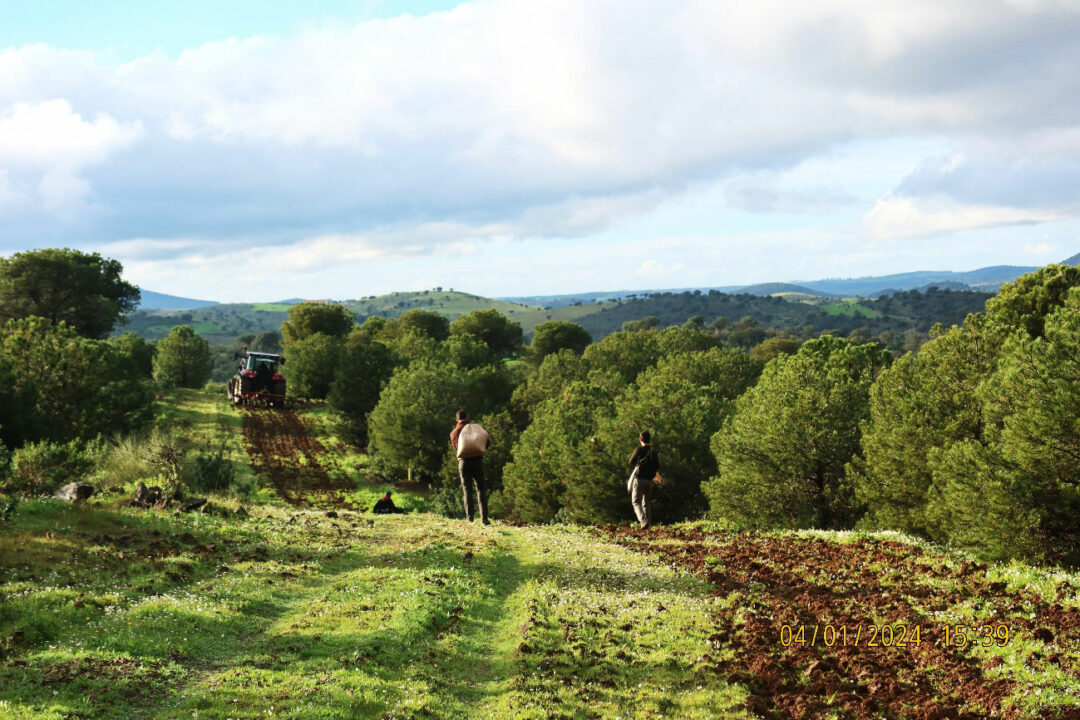
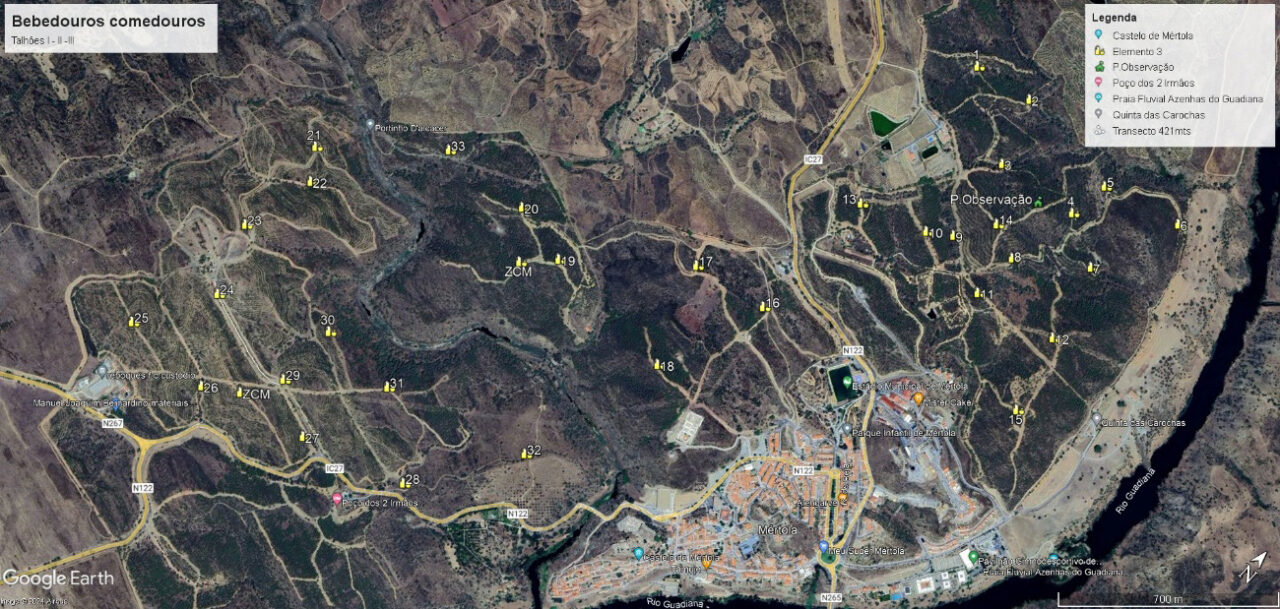
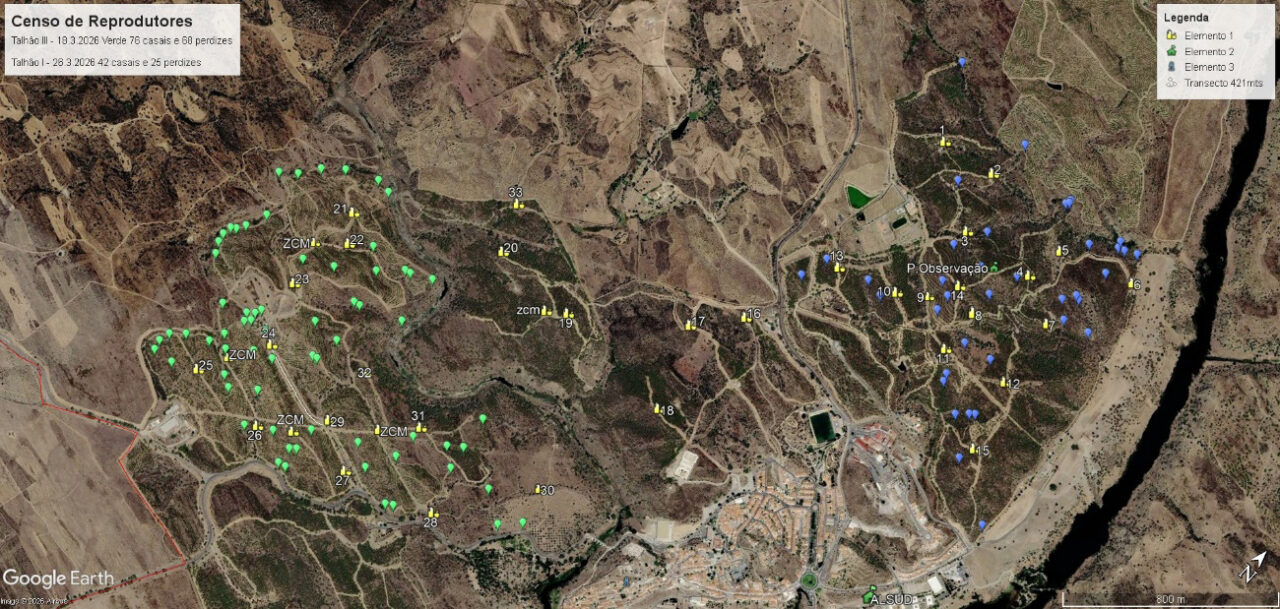
It is now an “Experimental Game Managed Estate” monitoring all the measures, relying on the intervention in this work of institutions with whom the school has already signed agreements and establishing a relationship or protocol for collaboration.
What has been done in the three grounds that make up the 304 hectares of the “Wildlife & Game Resources Management and Biodiversity Experimental Hub”, located in the Guadiana Valley Natural Park since 2021, is now a reality.
The Educational Programme of the Game Management Course (the only one of its kind in Portugal and Spain), the school’s more than 15 years of work, and this Experimental Centre’s five years, as well as the principles that have guided it.
These principles are based on a deep ecological understanding applied to the specific characteristics of this region, known for the cultural importance of game and hunting – Mértola being the Hunting Capital of Portugal – for increasingly adverse climatic conditions, and for a legacy of unsustainable practices.
The training is developed in accordance with the principles of humanistic foundation, knowledge, learning, inclusion, coherence, flexibility, adaptability and boldness, sustainability, stability, time and persistence, and creates opportunities for the students’ development.
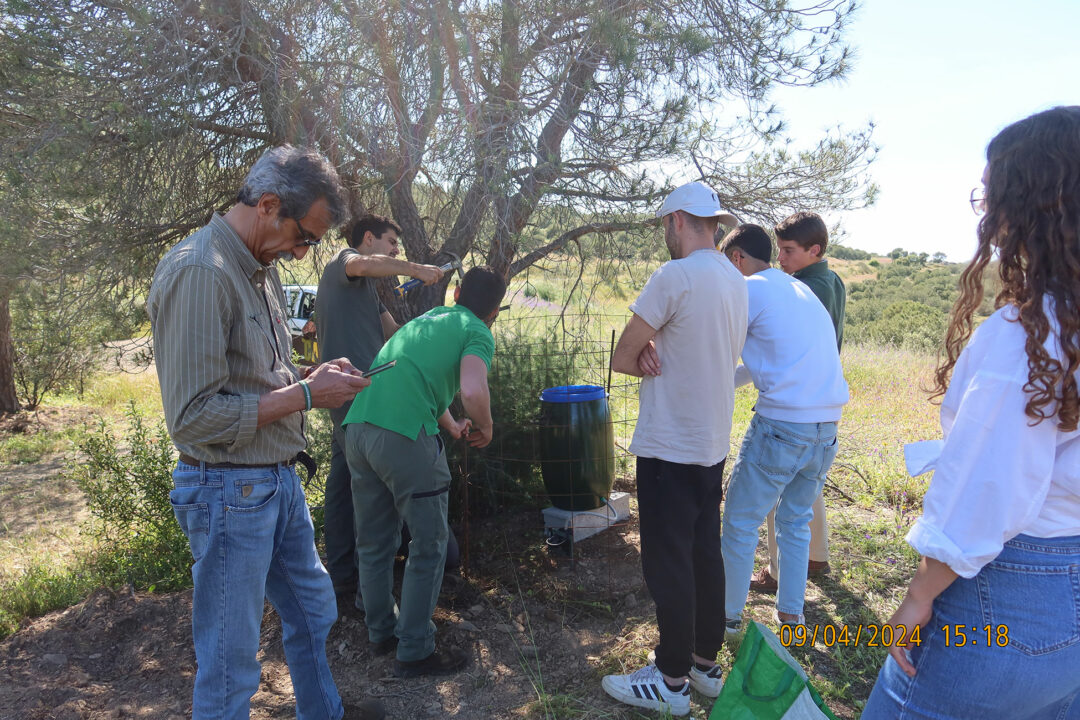
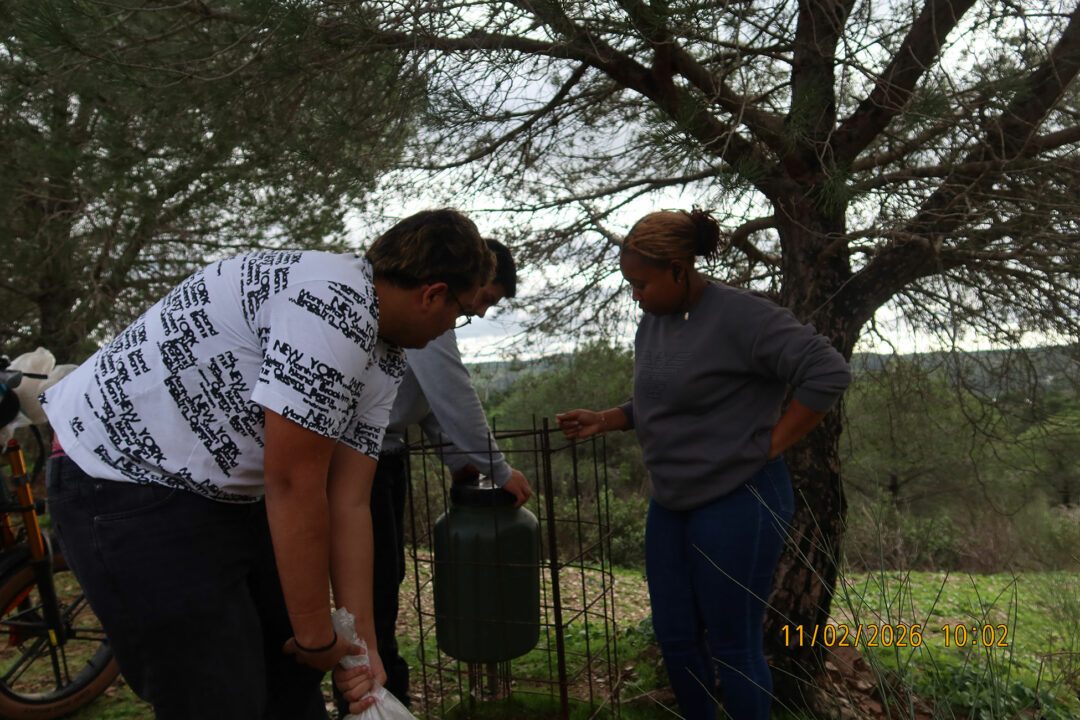
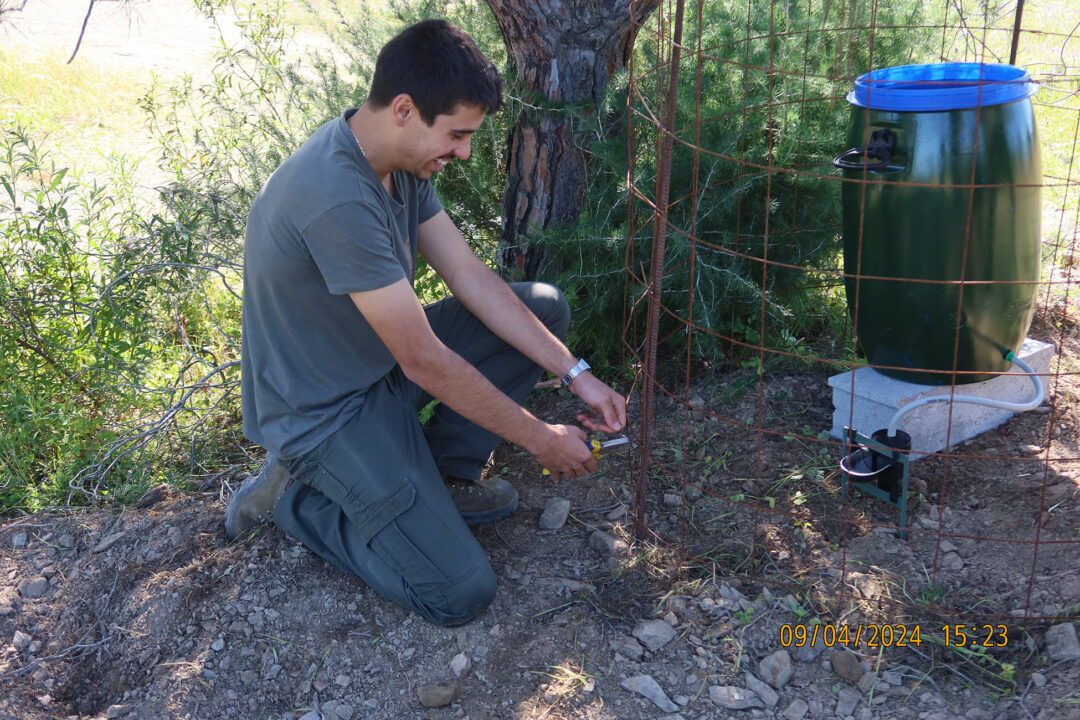
Students assembling a water drinker
The Centre works from a holistic perspective. It focuses on improving habitat conditions that allow wildlife to thrive, taking into account the entire system and present trophic interactions. It includes both the establishment of a kind of Game Management and a Shooting Practice that respects ecological processes and supports ecosystem restoration.
Thirty-eight stations for wildlife (numbered, each with one fresh water drinker and one grain hopper) have already been installed. These allow animals to find vital resources throughout all seasons. There is one of these stations every 7.5 hectares. These stations have greatly improved breeding success and are carefully maintained, full and clean, by students of the Game & Wildlife Management Course. They are designed with the different animal species’ behaviour in mind, aiming not to disrupt predator-prey dynamics.
Looking back, we might wonder whether such stations will cease to exist once the habitat has reached a certain level of regeneration. However, at present, there is no water available for wildlife under these adverse countryside conditions.
Around 8 hectares have been sown, and various grass and legume seeds are scattered throughout this area every year.
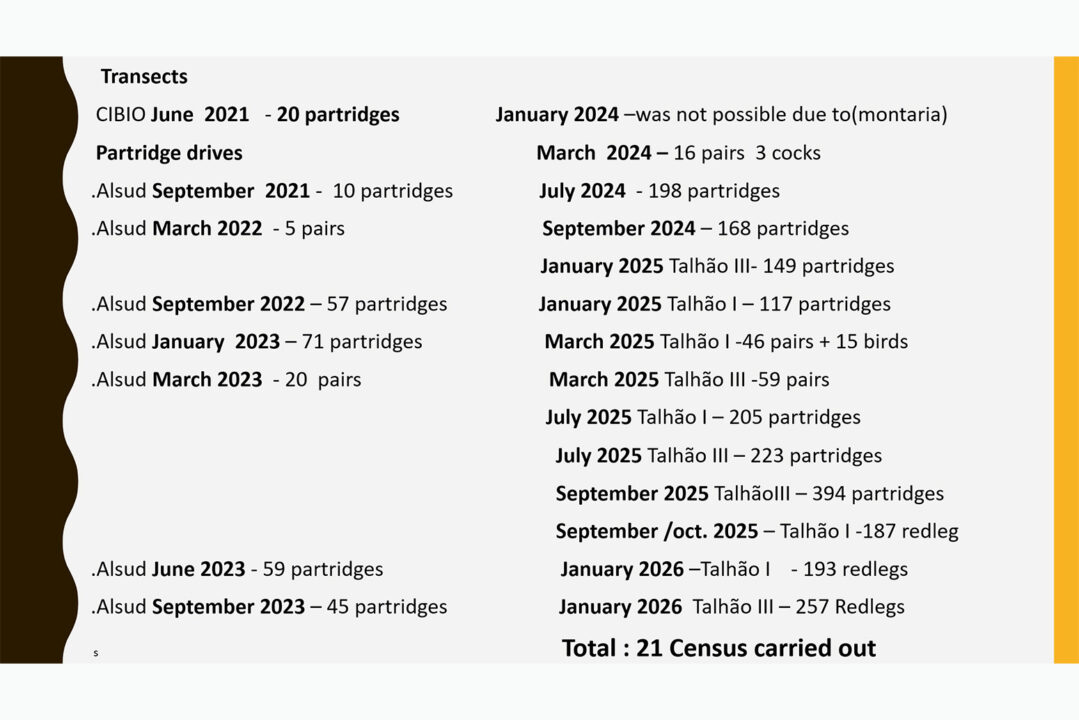
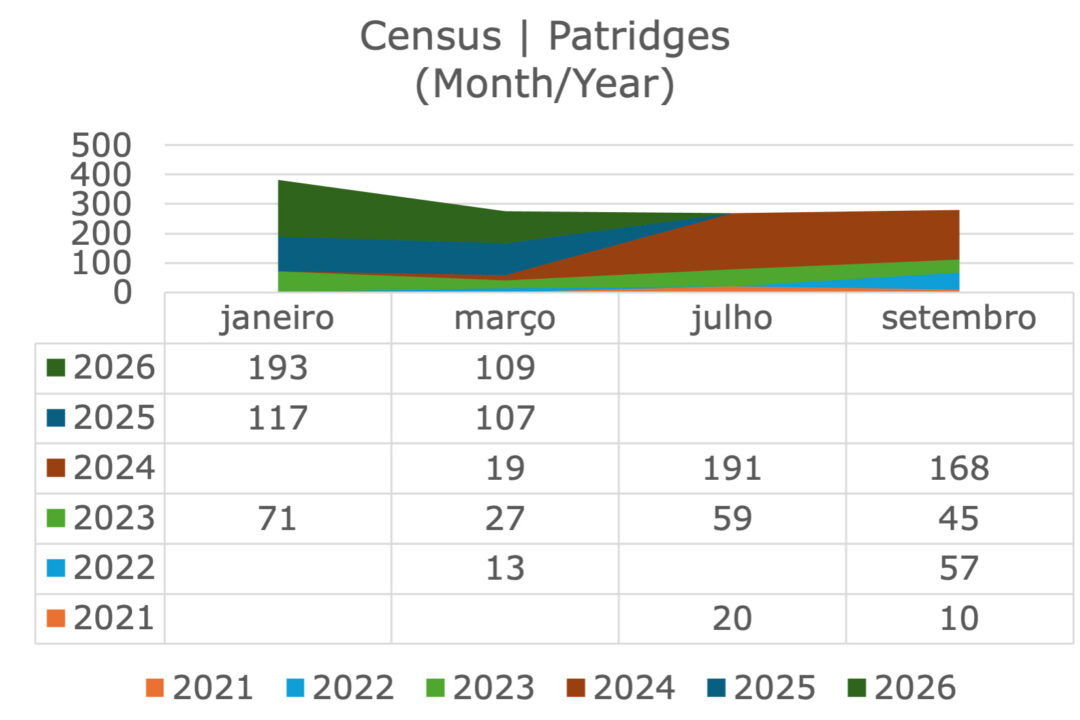
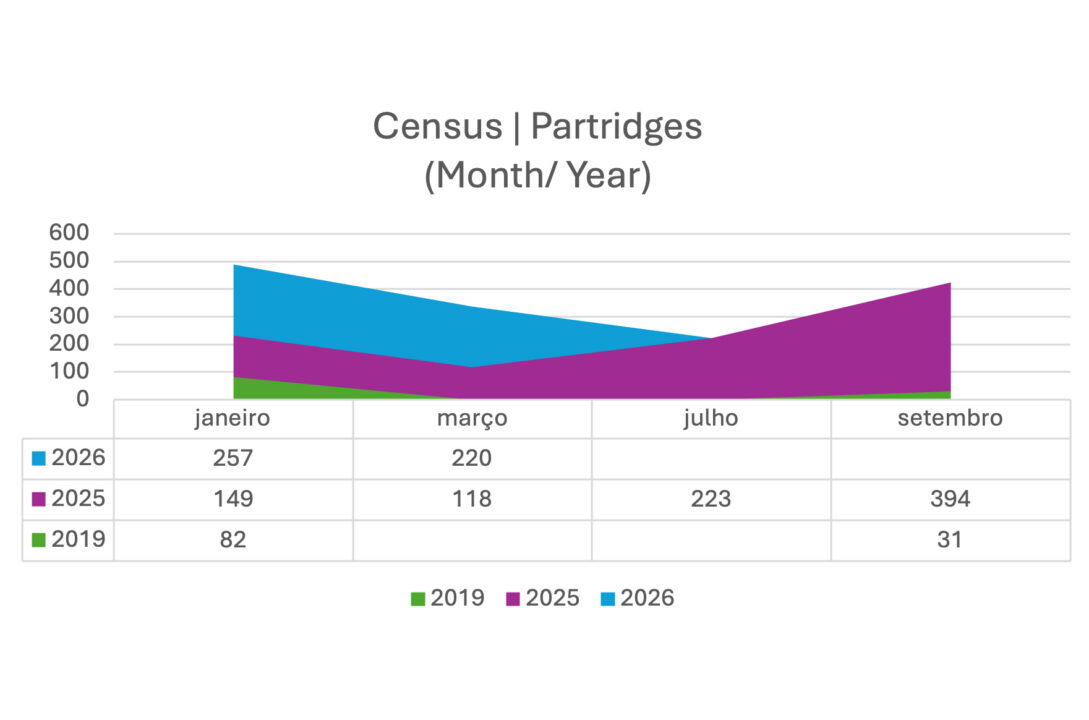
In addition, the students are responsible for monitoring wildlife populations. For example, in the case of the red-legged partridge, this takes place four times every year: January (winter population), March (breeding population), July (partridge chicks), and September (pre-season count).
It has thus been observed, over the last four years, with 23 censuses, that this population has increased exponentially, with a significantly higher number (from tens to hundreds) of individuals now present in this area managed by the Centre.
Our visitors have the opportunity to admire the numerous beautiful wild red-legged partridges, which are entirely native and not released, alongside wild rabbits, another vital species in this area’s food chain, and to see and hear a large quantity and variety of birdlife.
This Educational Centre, in addition to implementing innovative best Game Management practices with the students, now serves as a Demonstration Centre and a bridge between students, hunters, gamekeepers, landowners, conservationists, and scientists. With this, we hope that the relationship between these groups will grow stronger, with the understanding that the common goal is the prosperity of this incredible ecosystem, encompassing both its human and non-human components.
We hope there will be greater awareness of the need for Mértola to remain Portugal’s Game Capital and to restore the ecological and hunting balance of this disturbed ecosystem found in this precious land.
Escola Profissional ALSUD – Mértola, Portugal
joaogrosso@alsud.pt | +351 917 257 656