
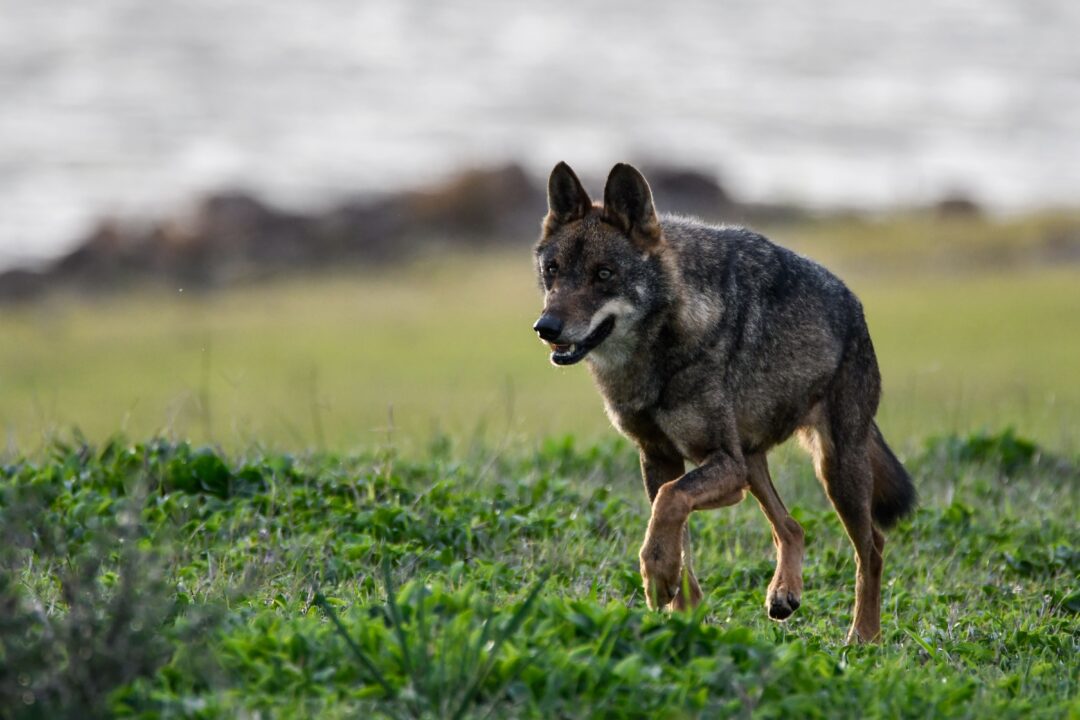
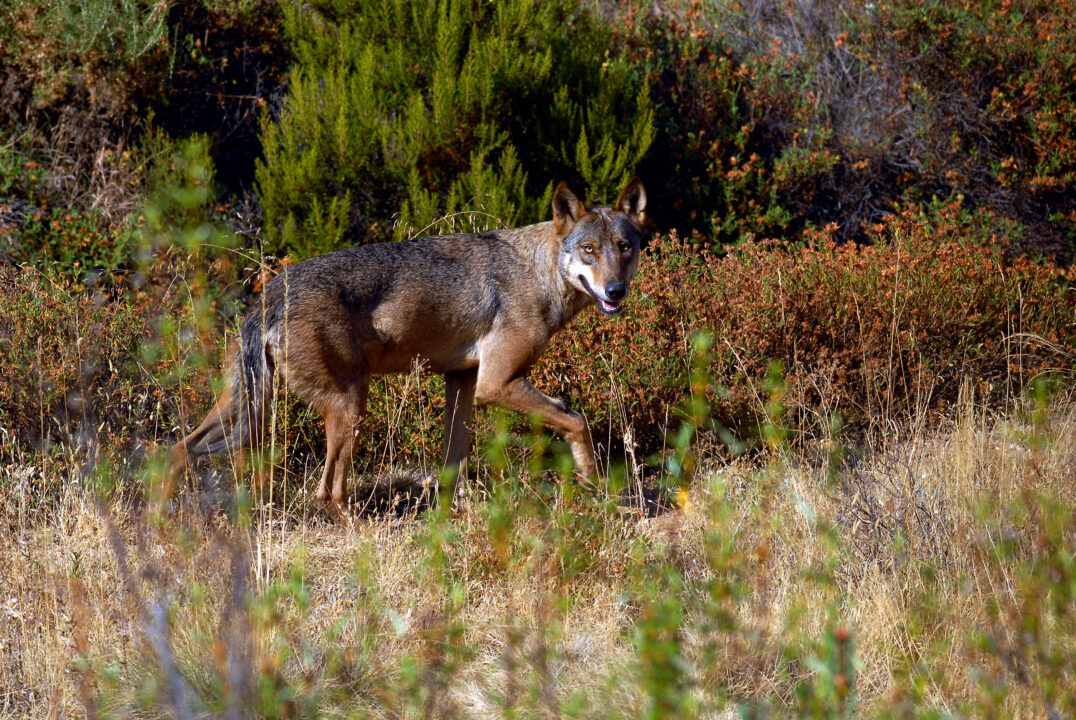
The Iberian wolf (Canis lupus signatus) is a key species for the balance of the ecosystems where it is found. As a top predator, it plays a role in prey species’ populations health and demography. However, in a landscape dominated by humans, issues can arise from this predatory behaviour, especially in its relationship with humans. Conflicts with humans is one of the main threats to Europeans’ wolves, making it crucial to minimize the consequences of wolves’ impact in rural areas. Simultaneously, it is essential to inform people in order to reduce the culture of fear and negative perception towards this species.
This need is particularly evident in regions where the primary livelihoods are linked to livestock farming or hunting resources, as it is the case in the Sierra Morena, in Spain. This mountainous region located in Andalusia hosts the southernmost wolf population of Europe. However, the main economic activities of the region can give rise to challenges in the coexistence between wolves and humans, which can result in illegal persecution of the species. This is an important factor to take into account for the future of the Sierra Morena wolf packs.
Having understandood the need to act, different organizations related to the hunting, environment, and livestock farming sectors, as well as the public administration have joined forces to launch a project focused on reducing conflicts between the wolf and local populations,to strengthen their coexistence in the Sierra Morena’s ecosystem.
This project is called Life Lobo Andalusia and is supported, among other institutions, by the Andalusian Hunting Federation (FAC), the Association of Rural Property Owners, Hunting Producers, and Conservationists of the Natural Environment of Andalusia (APROCA), and the Business Association of Breeders and Holders of Hunting Grounds in Andalusia (ATECA).
The project, focused on changing attitudes towards the wolf, is being implemented in the provinces of Córdoba and Jaén, encompassing four Natural Parks, a biosphere reserve, and 15 Natura 2000 sites within its scope of action.
Policy relevance:
Hunters make a significant contribution to the conservation of large carnivores and other wildlife across Europe. The importance of their work for large carnivores is recognized by organizations such as the IUCN LCIE (Large Carnivore Initiative for Europe), the Bern Convention, and the EU’s Large Carnivore Platform. Active participation from hunters in the conservation and management of species such as the Brown Bear, Lynx, and Wolf has contributed to the success of these initiatives.
This project demonstrates well how hunters contribute to the conservation of endangered species such as the Iberian Wolf, thereby supporting a large array of wildlife and biodiversity. These conservation actions are fully in line with the EU’s Biodiversity Strategy for 2030.
Five fundamental pillars were identified to achieve the established objectives for the project:
- Modify the negative perception held by some gamekeepers, managers, and owners of hunting estates located in Sierra Morena.
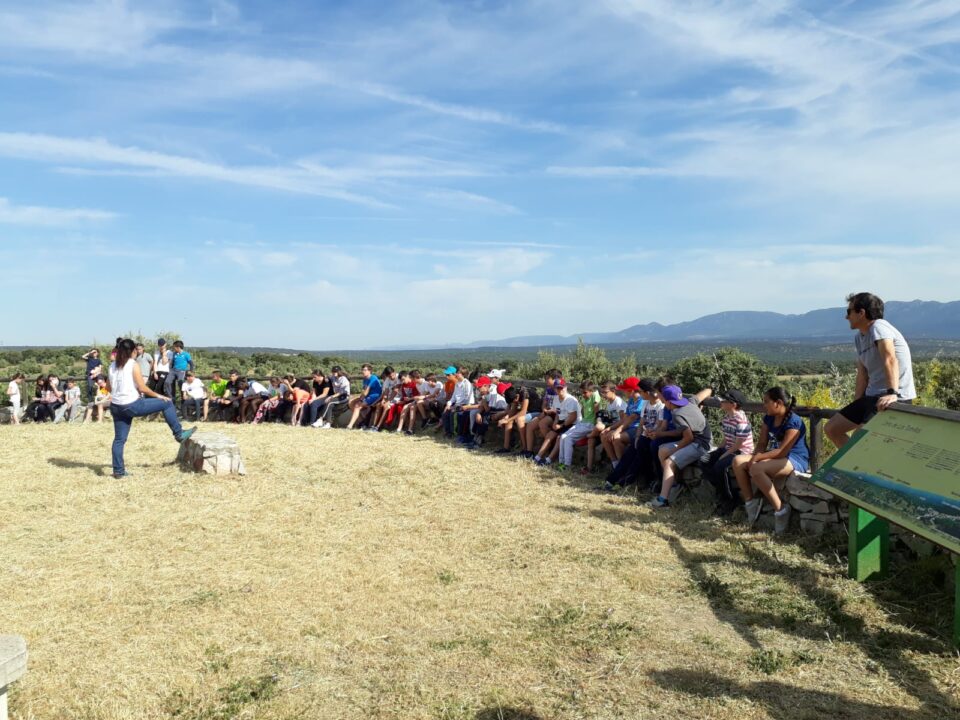
- Raise awareness among the rural population about the conservation problems of the wolf, working towards a mindset change to a more favorable attitude towards this animal.
- Improve rural population’s information and knowledge about the wolf, especially among hunting and livestock communities, reclaiming its image for local culture.
- Understand the Sierra Morena rural population’s attitude towards the wolf.
- Highlight the added value that the wolf can bring to the rural economy.
The participation of organizations linked to hunting in projects like this is a strong demonstration of commitment and motivation from Spanish, and in general, European hunters towards this large carnivore conservation. It is even more remarkable in an area where historically the wolf has not been a huntable species. The involvement of hunters in these projects shows their interest in the management and contribution to the future of the wolf. They are aware of the need for policies that reduce anthropogenic conflicts with the top predator and create conditions for all indigenous species to thrive.