

The LIFE Wild Wolf project, “Concrete actions for maintaining wolves wild in anthropogenic landscapes of Europe”, aims to improve coexistence between wolves and people in urban and peri-urban areas, while preserving both the ecological role of wild wolves and the cultural identity of local communities.
When roaming in and around urban, peri-urban, and rural areas where dogs may be left to roam freely, wolves can encounter dogs and engage in series of positive or negative interactions. Wolf attacks on dogs can potentially be mitigated by changes in dog management; however, in some cases, such changes may result in impractical modifications to human habits that may clash with traditional practices. This is particularly relevant for hunting dogs, which may be injured or killed by wolves, although technical tools have been developed to address this issue.
In the second year of testing protective dog vests, the aim was to test innovated models based on feedback from Croatian hunters after the 2024/25 hunting season, and to gather further suggestions during meetings in September in the Dalmatian hinterland, Croatia.
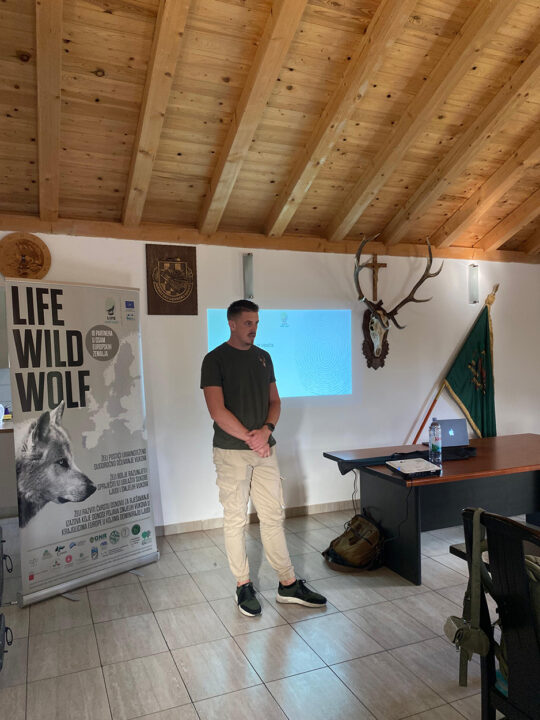
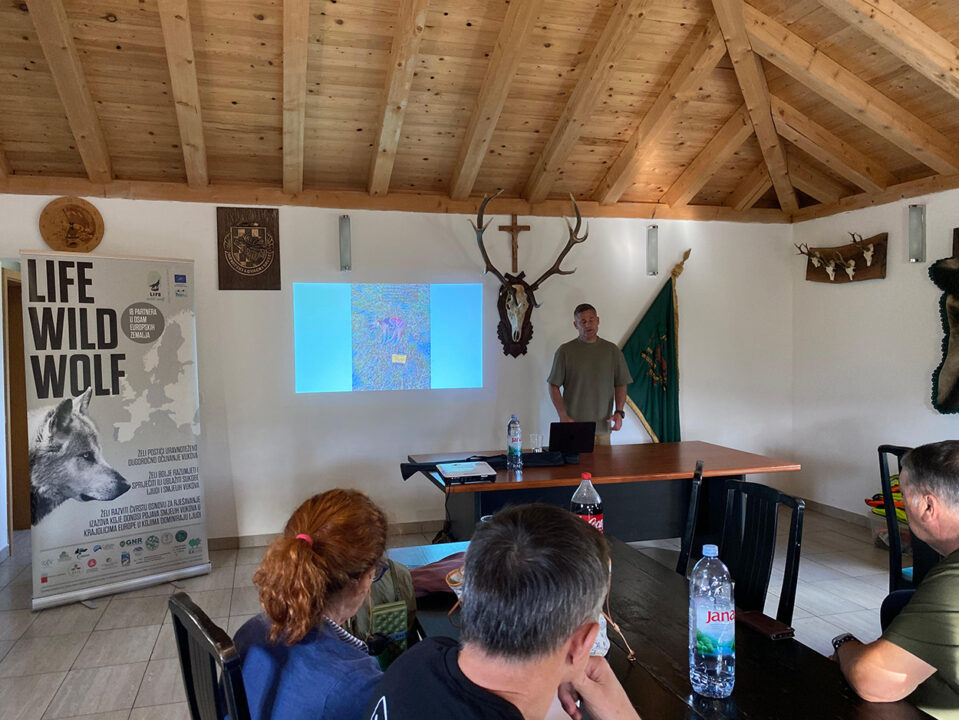
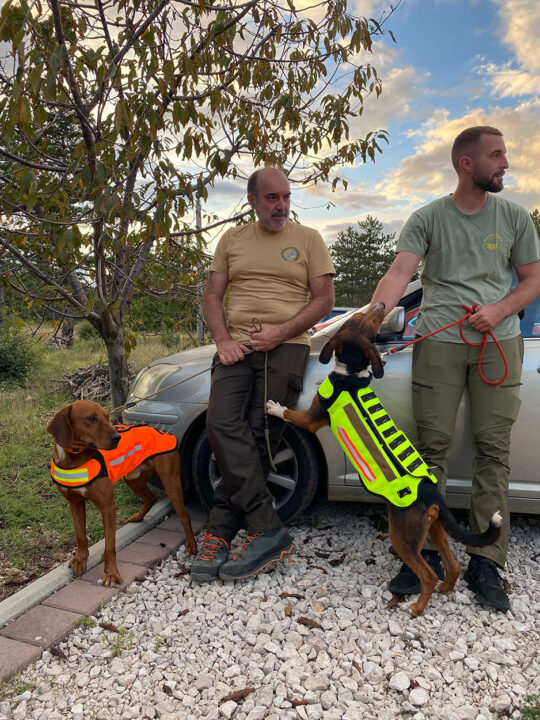
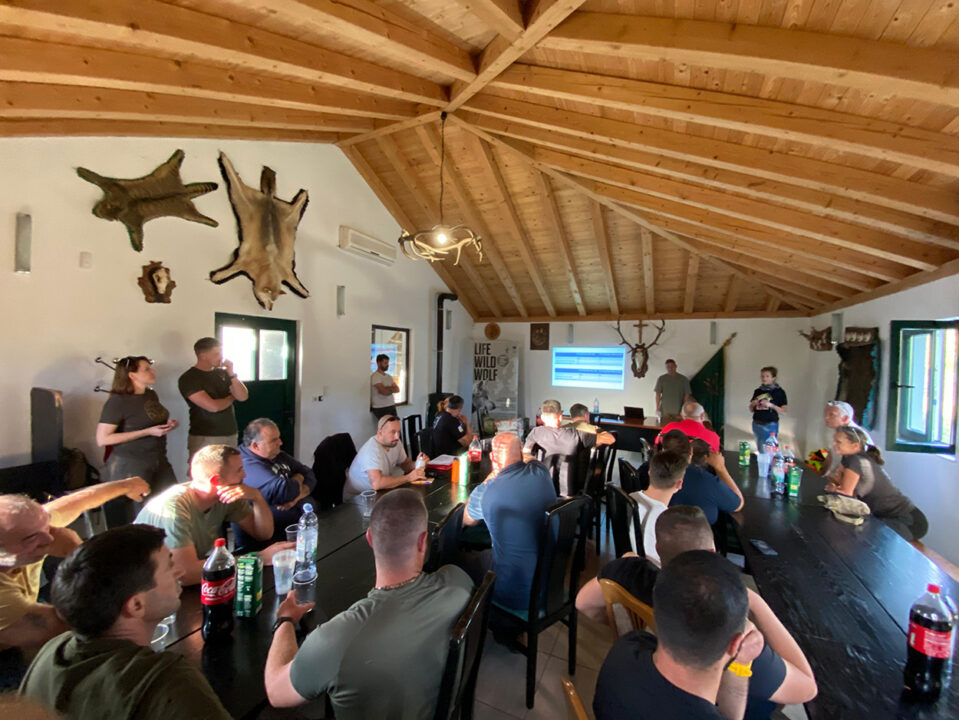
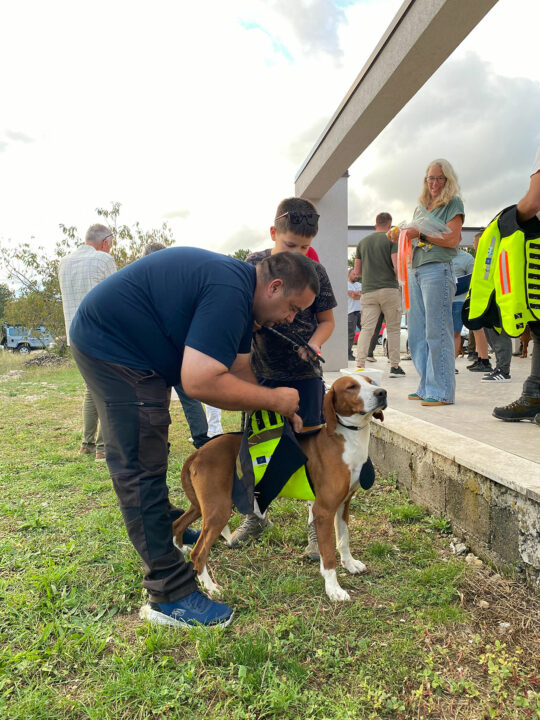
The LWW team provided feedback and shared data after the first season of testing, led by Frank Jens from the Swedish University of Agricultural Sciences. Hunters and dog owners from Croatia also contributed insights and additional information about the use of such protective devices. The manufacturer, Dog Tech, provided information on improvements and innovations to the dog vests, including features specific to protection against attacks by wolves and wild boars. Approximately 20 improved models were demonstrated and fitted to hunting dogs in three Dalmatian counties.
The event was also attended by experienced hunters’ representative Isabella Villa from the Italian Hunting Federation, and Evangelos Theodosiadis from Callisto, a Greek organisation with extensive experience in coexistence and cooperation with interest groups such as hunters and farmers. Italian hunters and dog owners expressed interest in testing dog protective devices (vests and collars) in 2025/26, and the LWW team committed to additional testing in Italy.
The next generation of protective devices will be improved and distributed during the 2026/27 hunting season as planned, with approximately 120 units in Dalmatia and some replication in other parts of Croatia, Italy, and potentially other interested regions and countries