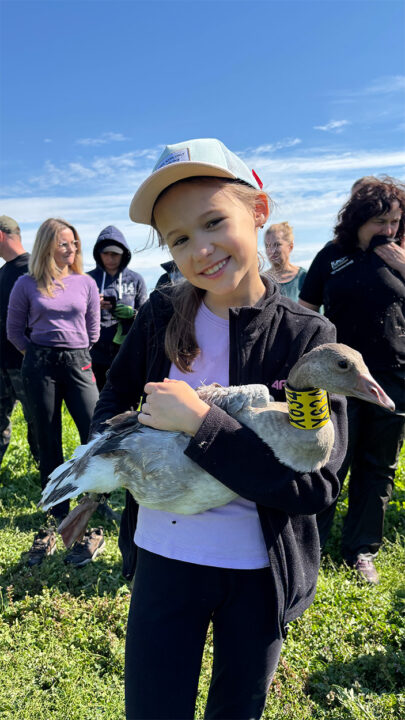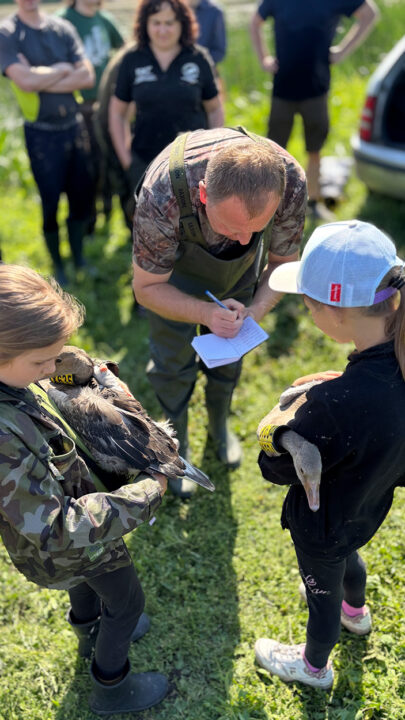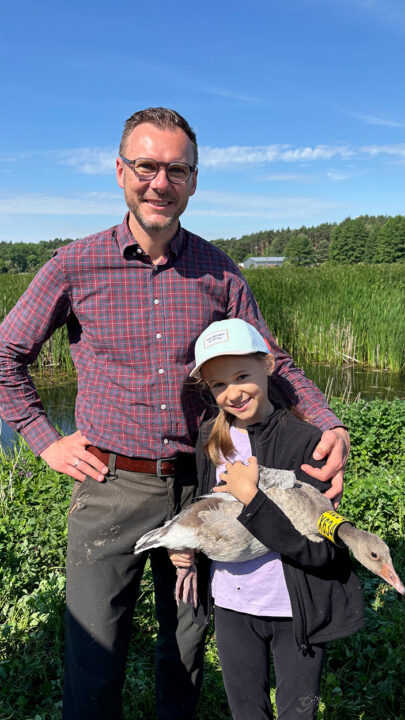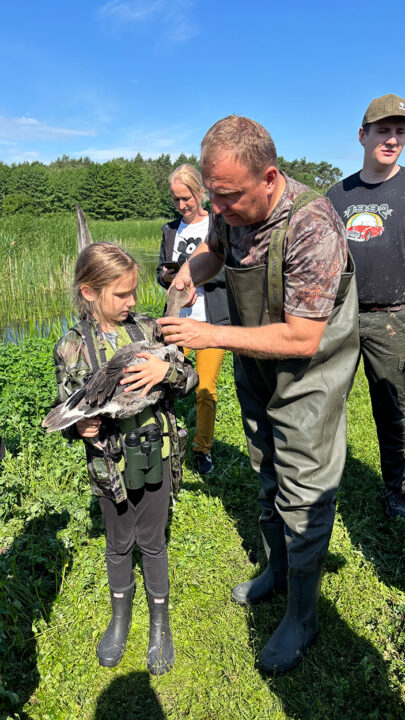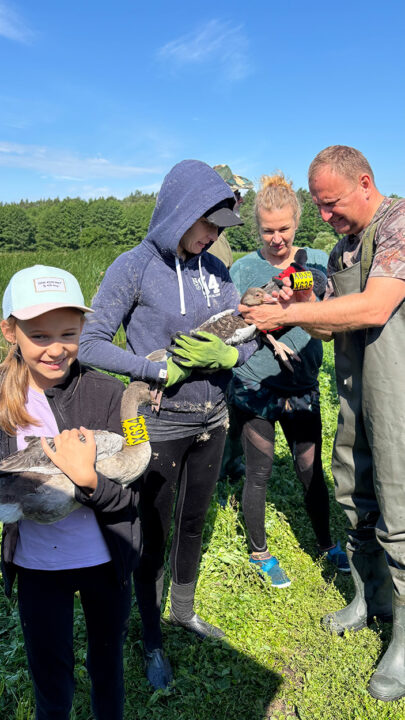

Thanks to the commitment of hunters, ornithologists, nature enthusiasts, students, and local communities, the Polish Hunting Association (Polski Zwiazek Lowiecki) continues its efforts to monitor the population of greylag geese (Anser anser). The annual ringing campaign is a vital component of research into the species’ migration patterns and overall population health.
The initiative has long been coordinated by hunter and ornithologist Dr. Bartosz Krąkowski – an avid advocate for greylag geese – who effectively inspires both the scientific community and nature lovers across Poland. These joint field efforts, bringing together diverse stakeholder groups, demonstrate that care for the natural environment can serve as a shared platform for collaboration beyond divisions. This year’s capture and ringing sessions took place at the Gospodarstwo Rybackie Skoki.
June is a key period for such activities. During the molting season—when primary and secondary flight feathers are replaced—wild geese temporarily lose their ability to fly, making safe capture possible. Each bird is fitted with a metal ring on its left leg and a yellow neck collar bearing an individual identification number visible from a distance. Occasionally, other species are also captured, including rare ones such as the red-necked grebe (Podiceps grisegena), which are likewise ringed.
Each marked bird provides valuable scientific data. Information collected through ringing helps researchers better understand migration routes, behavior, and ecology, while also supporting the implementation of European Union environmental policies on biodiversity conservation.
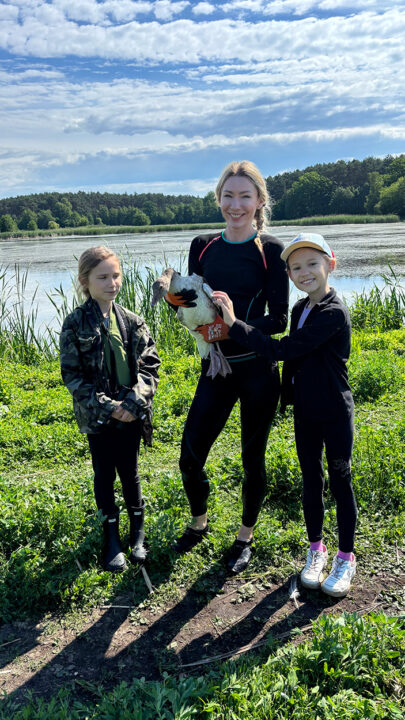
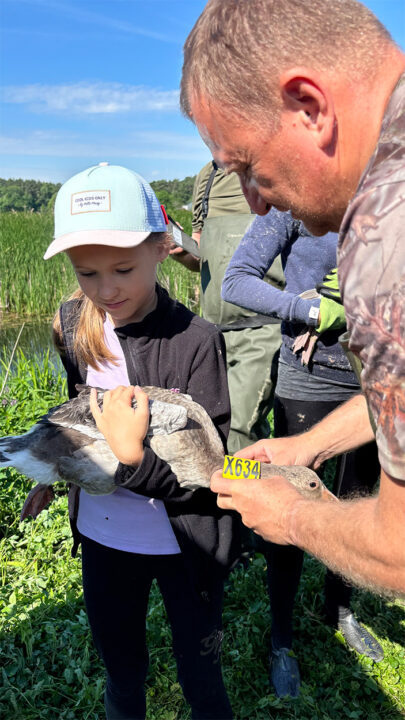
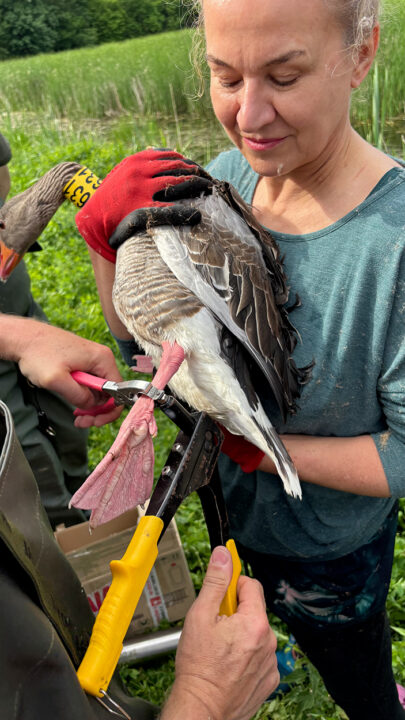
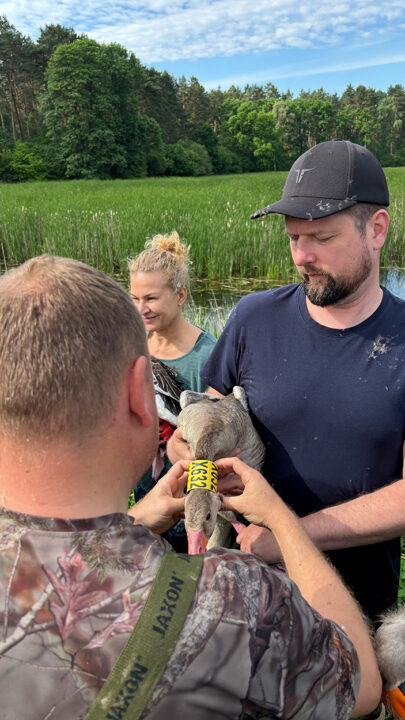
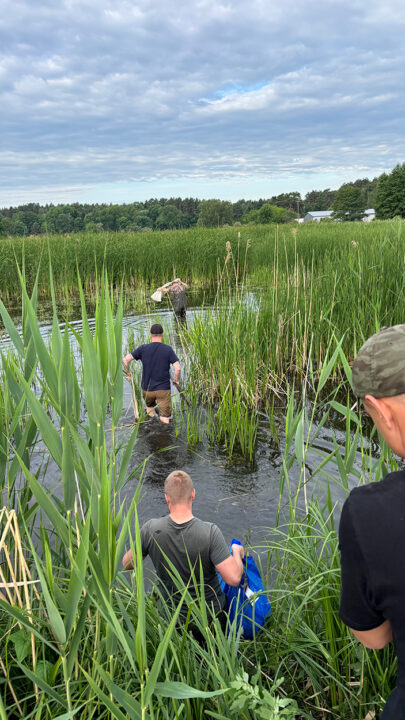
Since 2012, more than 1,800 greylag geese have been ringed, enabling effective tracking and long-term population analysis. Over this period, significant changes in migration patterns have been observed. Polish greylag geese have largely abandoned long-distance migration to wintering grounds in Spain or even the Netherlands. Today, most individuals remain in Poland for the winter.
Researchers have also gained deeper insight into molting migrations, with birds from Poland traveling to eastern Germany, Denmark, and Sweden. Populations from southern Poland visit the Czech Republic and Slovakia, and occasionally choose Hungary as a wintering destination.
These findings highlight that birds do not recognize national borders and underscore the importance of international cooperation among research teams. Collaboration and data exchange are essential
for effectively protecting natural resources, identifying threats, and mitigating their impact on individual species and populations.
Source: Jaroslaw Kuczaj, Environmental Policy Expert