
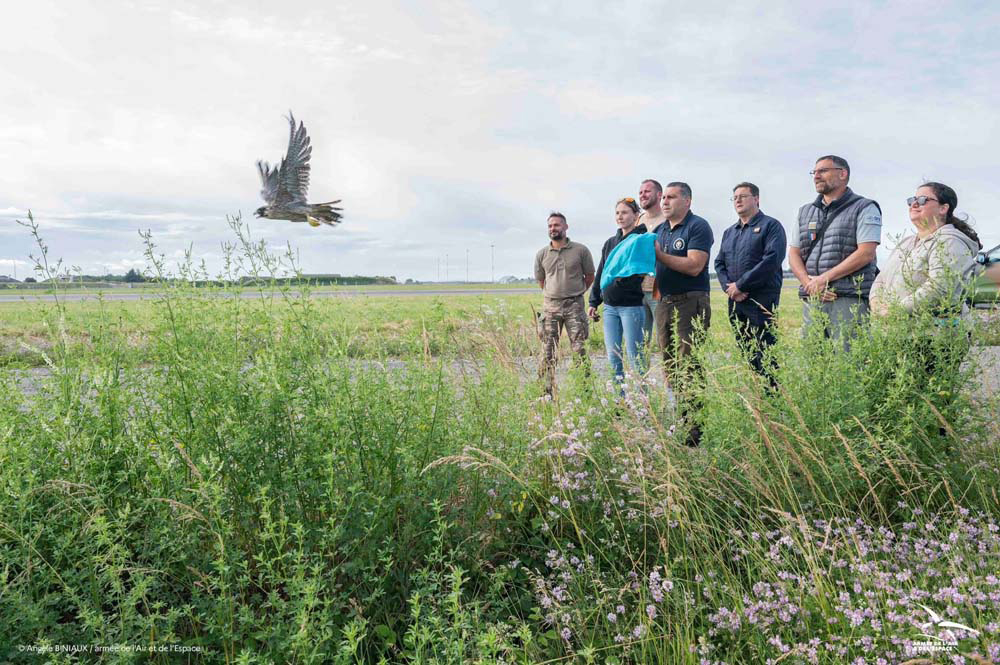
On 10 June 2026, a young female peregrine falcon was returned to the wild after nearly ten months of rehabilitation. Behind this release lies a remarkable human and technical effort, made possible through cooperation between wildlife rehabilitation centres, the French National Association of Falconers and Austringers (ANFA), the French Biodiversity Agency and Avord Air Base.
The bird had been rescued after falling from its nest on Chartres Cathedral. As part of ANFA’s nature conservation cooperation with the Wildlife Rehabilitation Centre Network, it was entrusted to Thomas Garrido, a member of ANFA’s management committee and head of the Wildlife Strike Prevention Unit at Avord Air Base. The objective was to give the bird every possible chance of returning to a fully wild life.
When the young falcon arrived at Avord, the situation was clear: it had never flown or hunted and had no experience of life in the wild. In falconry, such a bird is known as an eyas. Everything therefore had to be learned.
A challenge: learning without becoming tame
The difficulty of this rehabilitation did not lie solely in teaching the bird to fly and hunt. The real challenge was to equip the young falcon with all the skills needed for survival without compromising its wild nature.
From the outset, one fundamental principle guided the entire process: preventing any imprinting on humans.
The objective was not to turn the bird into a falconry bird, but to enable it to become a wild falcon capable of living freely and surviving independently.
To achieve this, a rapid period of initial falconry training was carried out to establish the minimum level of control required for monitoring and training.
This balance is particularly difficult to achieve. Insufficient control makes rehabilitation impossible, while excessive control risks creating dependence on humans and reducing the animal’s chances of survival after release.
It is precisely in maintaining this balance that the expertise of ANFA’s falconers is demonstrated. Through their in-depth knowledge of raptor behaviour, they are able to guide a bird through the learning process while preserving its natural instincts, independence and wariness of humans.
For more than 80 years, ANFA has worked to transmit and preserve falconry knowledge and skills. This rare expertise was one of the keys to the success of the operation.
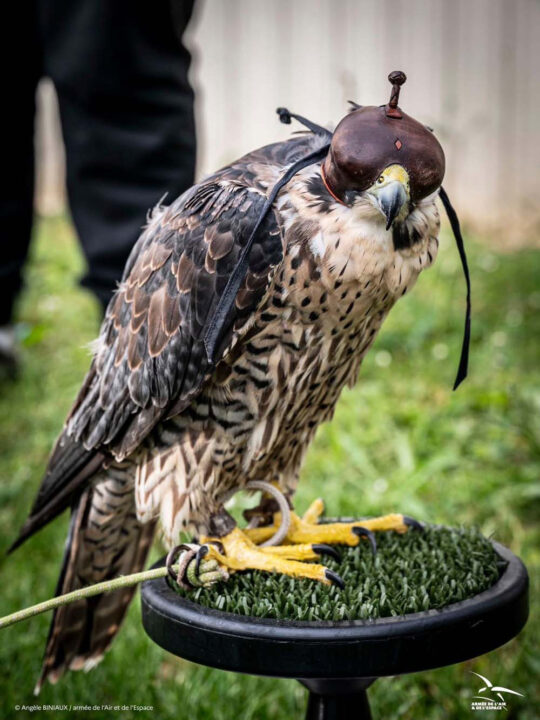
Ten months of learning
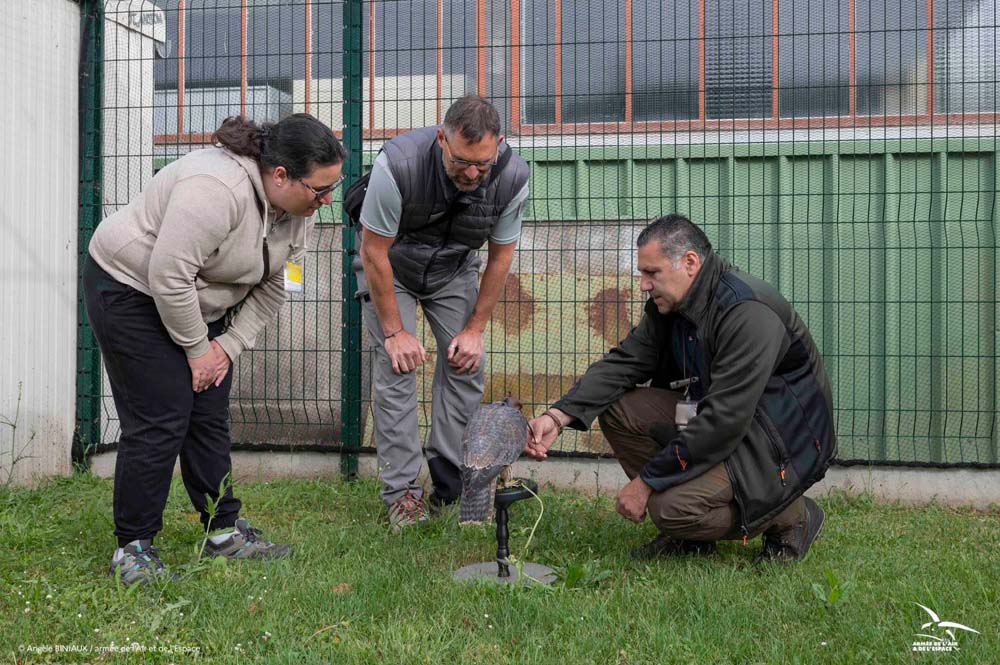
Between September and October, efforts focused on creating the conditions needed for the bird’s development while preserving its wild nature. The following months were devoted to almost daily training.
The first step was to develop the bird’s physical condition. Its musculature, stamina, breathing capacity and quality of flight were all carefully strengthened.
At the same time, the young falcon had to learn what its parents would normally have taught it in the wild: how to identify prey, develop hunting techniques and acquire the reflexes needed to hunt successfully.
Thomas Garrido quickly observed that the young female displayed remarkable intelligence and an unusual ability to learn. In falconry, she would have been described as a “good pupil”, meaning a bird that learns very quickly and makes progress every day. Thomas was convinced that she had all the qualities needed to survive.
Over the following months, the bird made steady progress. It gained strength, confidence and effectiveness. Its captures became regular and its predatory behaviour fully developed. Through experience, a falconer is able to assess the natural hunting drive of a raptor. This young female possessed all the necessary abilities.
Once she had demonstrated that she could capture prey regularly, gain height powerfully and move confidently through the air, her release could be considered.
Rewilding before release
Before the bird could be returned to the wild, a period of isolation was introduced to support its complete rewilding.
This essential stage aimed to reduce human interaction further and gradually place the falcon in conditions as close as possible to those it would encounter in nature.
Once this phase had been completed, all the conditions were in place for its release.
The date of 10 June 2026 was not chosen at random. At this time of year, young wild birds are also beginning to become independent. Many of the species naturally preyed upon by peregrine falcons are then young and still inexperienced.
The young female therefore returned to the wild with considerable advantages: well-developed musculature, full mastery of flight and genuine hunting experience acquired during rehabilitation.
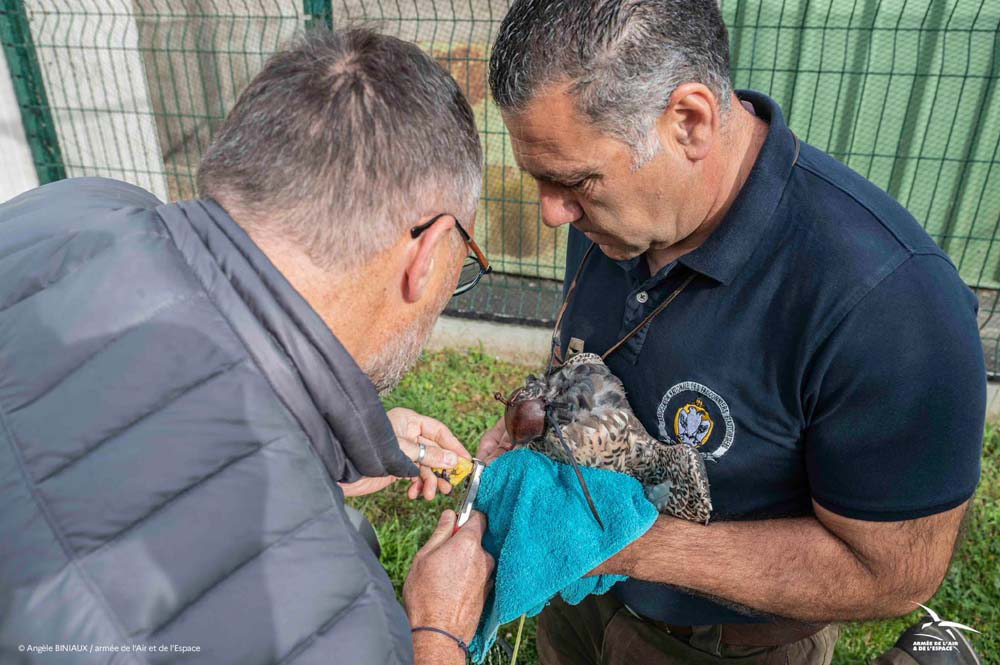
Every effort was made to give her the best possible chance of success. Before release, the bird was fitted with a microchip by the rehabilitation centre and ringed by the French Biodiversity Agency, allowing for possible future monitoring.
A collective success – The release took place in the presence of:
- Thomas Garrido and his team from the Wildlife Strike Prevention Unit at Avord Air Base;
- an environmental police inspector from the French Biodiversity Agency;
- a representative of the Wildlife Rehabilitation Centre Network.
This success demonstrates the complementarity between rehabilitation centres, public authorities and falconers who have long been involved in biodiversity conservation.
It also highlights the specific contribution that falconers can make to the conservation of wild raptors: providing a bird with the skills it lacks while fully preserving its natural behaviour.
Acknowledgements – ANFA extends its sincere thanks to:
- Manon Tissidre, Director of the Wildlife Rehabilitation Centre Network, for her trust and recognition of the work carried out;
- Ms Larivière-Dantan, head of the Apus Apuces rehabilitation centre, for her daily commitment to wildlife and the trust placed in our association;
- the French Biodiversity Agency, for its availability and support throughout the operation;
- Avord Air Base, which authorised the bird to be housed on its premises and made it possible to carry out the rehabilitation under the best possible conditions;
- Thomas Garrido and his team, whose expertise, rigour and daily commitment enabled this young female to return to the skies.
- Mission accomplished for ANFA and its partners
This rehabilitation clearly illustrates the contribution that ANFA can make to wildlife conservation: unique expertise based on an in-depth understanding of raptors and absolute respect for their wild nature.
After ten months of work, the young female regained her freedom in the best possible conditions, able to fly, hunt, survive independently and, above all, remain fully wild.
For more information, please visit:www.fauconnerie-francaise.com